
Brand New Bespoke Kitchen in Arts & Crafts House by Nathan Kingsbury
By Linda Parker
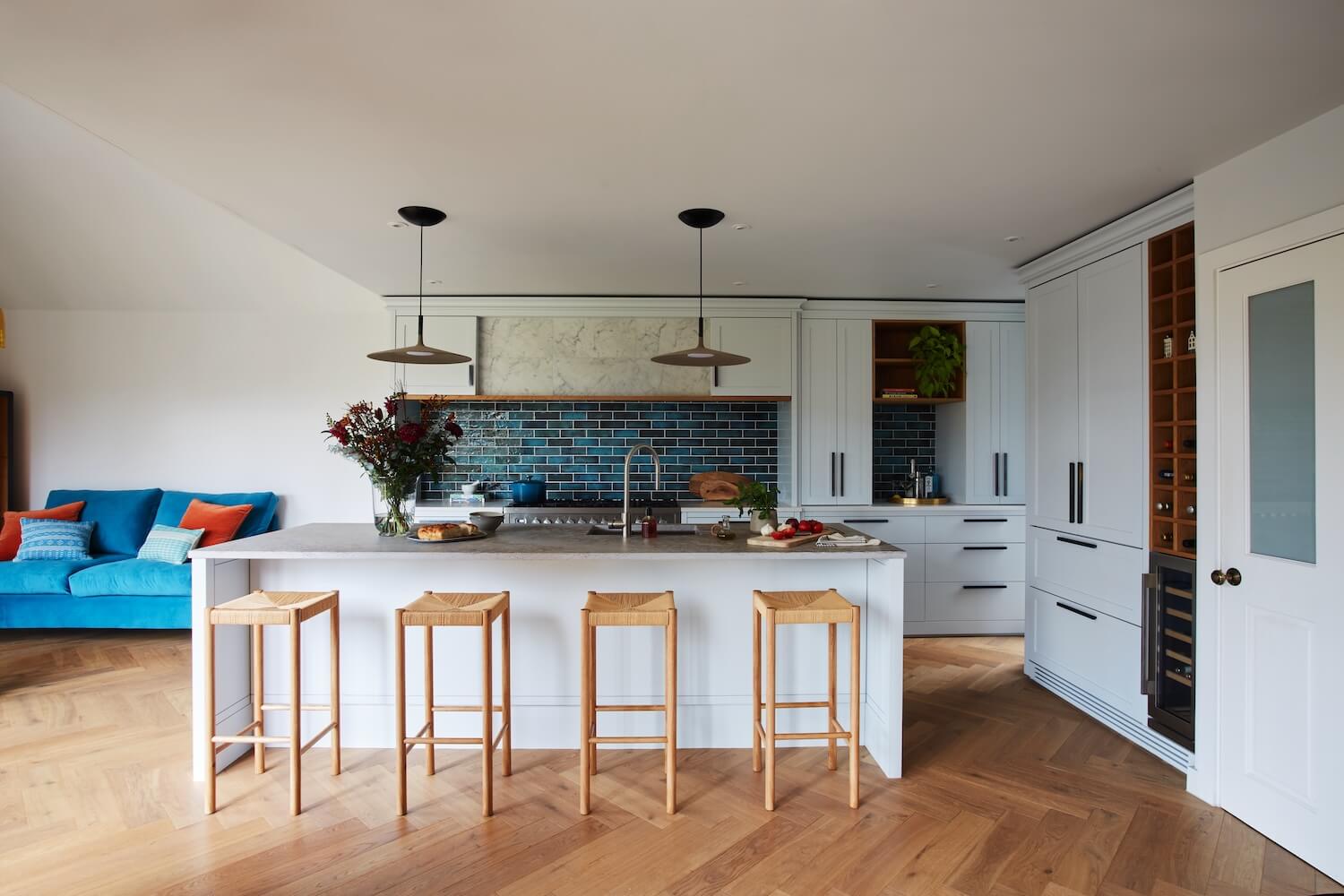
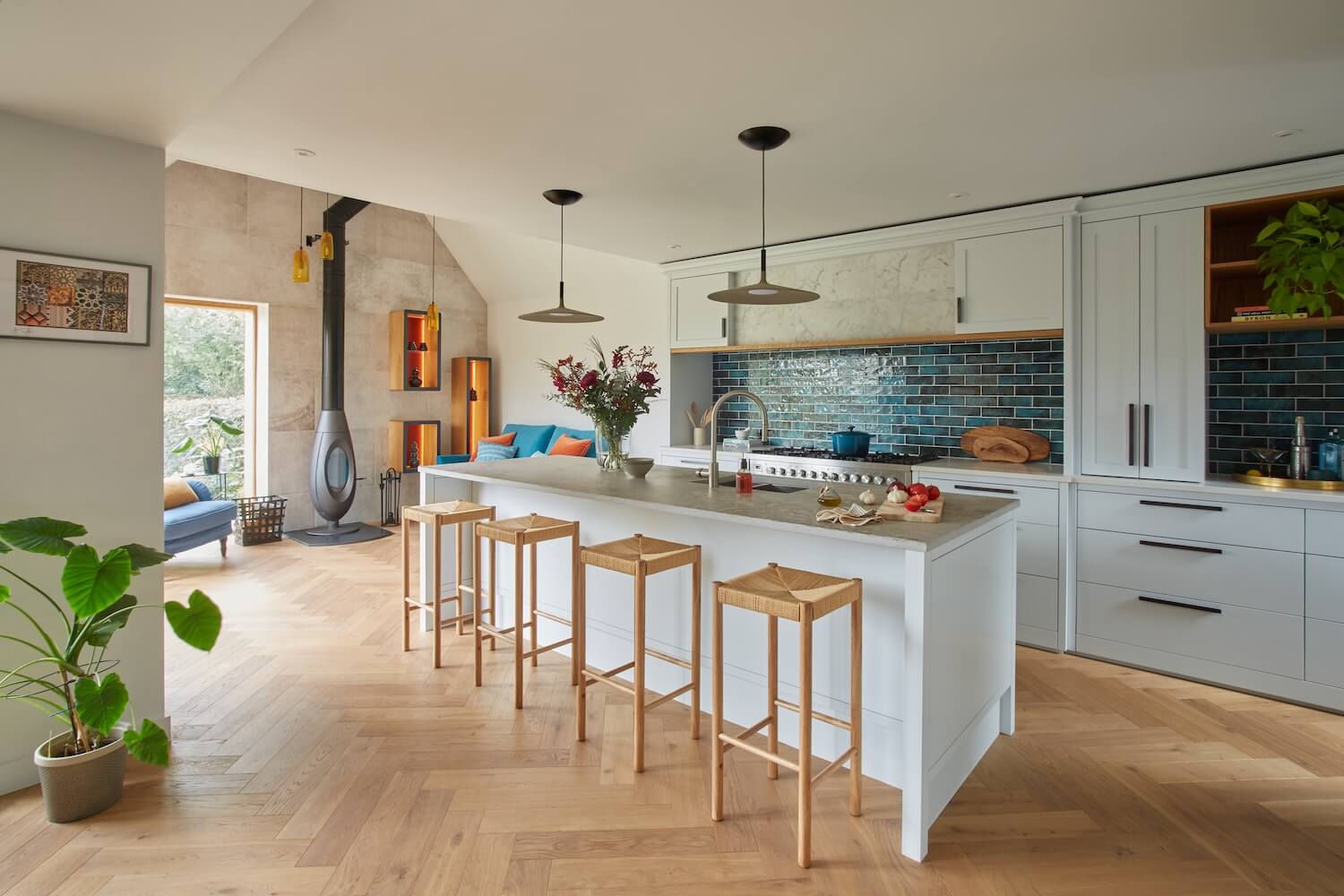
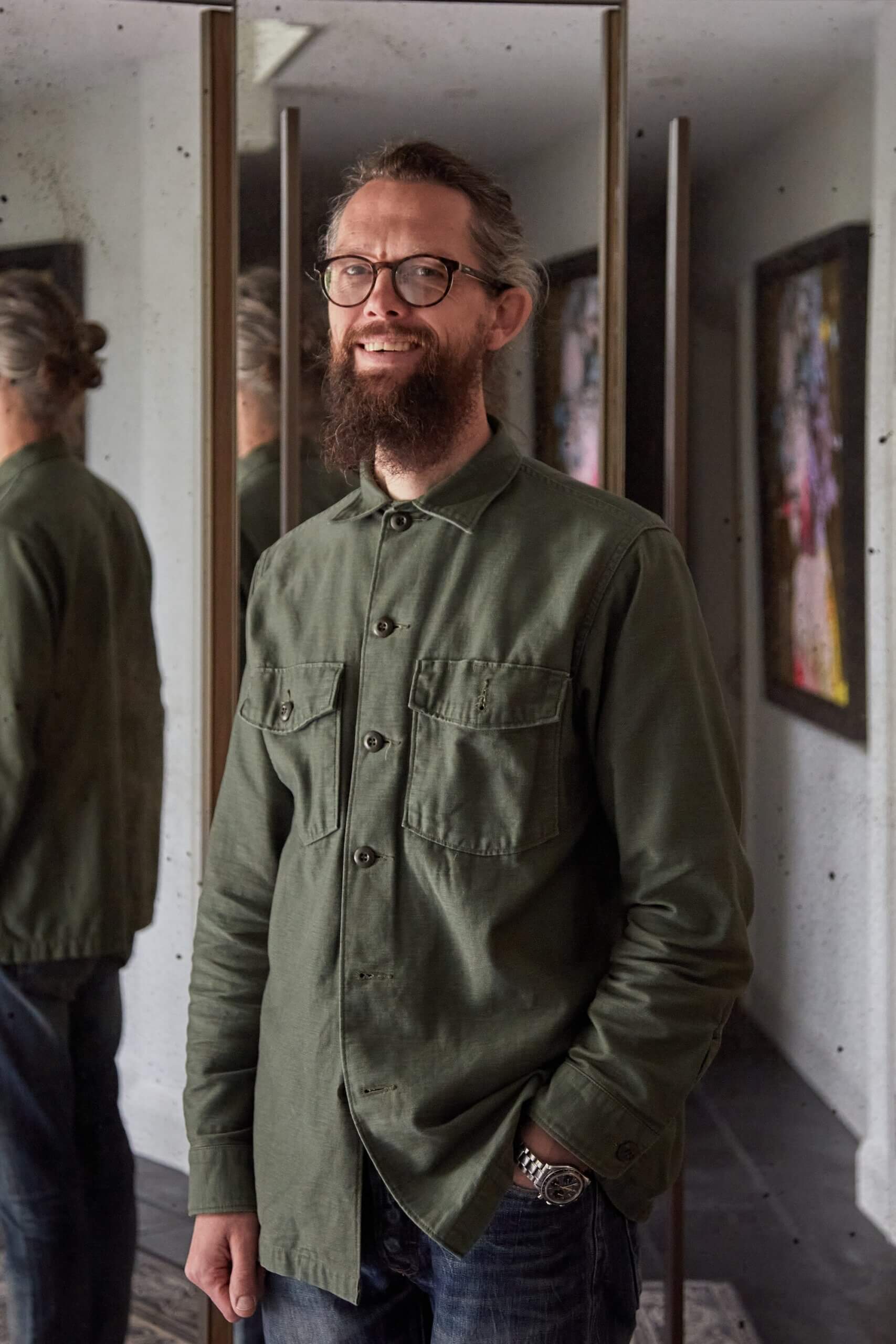 This beautiful project by Nathan Kingsbury encompasses the kitchen, living and dining areas and includes a spacious utility room and pantry.
Designer Nathan Kingsbury talks us through this interesting project, where the entire design consultation was carried out via Zoom as his clients were at the time living abroad…
Q: What were the stand-out priorities in your brief from the client, and how did you meet?

Our clients, Brian and Michelle, were introduced to us via an architect. They said they wanted me to push them outside of their comfort zone, as ‘otherwise there isn’t any point using a designer’ as Brian put it. Another key priority for them was that I was able to take on the entire project – design, manufacture and installation of all the elements. I would be making all the decisions, from style of joinery to the lighting and colour palette.
They had been away from the house for 12 years, living abroad. They really wanted to create a home that was very much theirs and reflected their life and personal style. At some point in my first conversation with Brian, I said, ‘what we create together will be truly yours’ and he said that this comment continued to resonate for him after we spoke.
Q: How did you set about answering that brief?
My approach with all projects is almost always the same and begins with me asking lots of questions about their lifestyle and how they use their home. Do they like to cook a lot? Is it more about family time or do they have loved ones over to entertain? What are the elements they like about the space now and how would they like to improve it?
With this project, one key aspect stood out and that was that the property backs onto a woodland and they often have deer and other wildlife in the garden. The architect had also designed a double aspect feature window in solid oak – their window to the most incredible view. I wanted to play on the theme already created by the architect and enhance these features as much as possible.

Q: Was the kitchen to be designed within an existing kitchen space or a newly built extension?
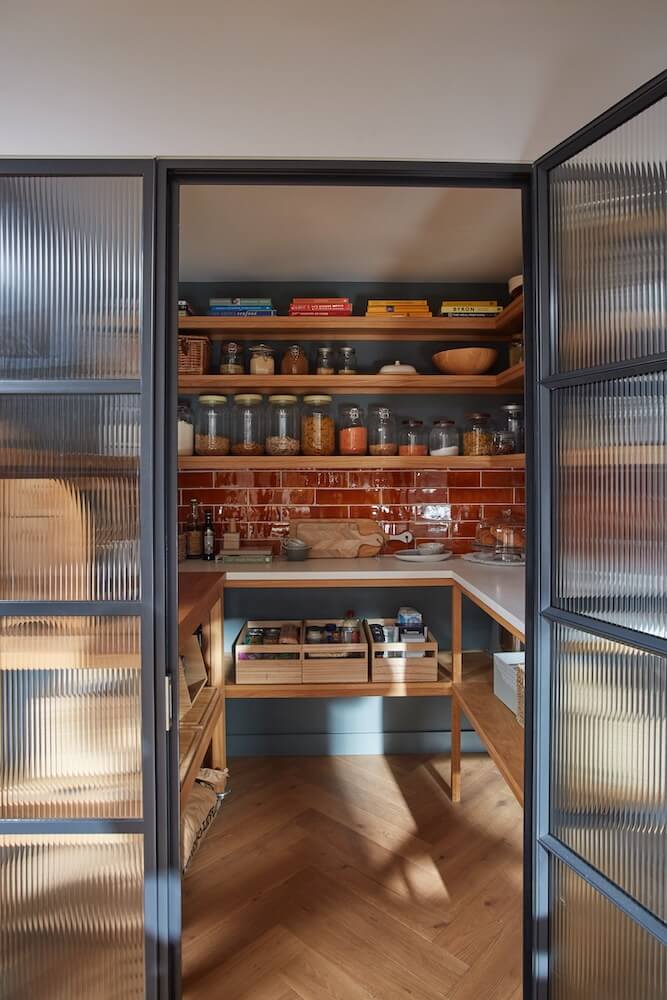
The kitchen was designed to be in a new extension to the house, which had a very different vibe but was still sympathetic to the existing Arts & Crafts building. The architect and another team had designed and built this element, and we had no particular limitations. We did have a very large, vaulted ceiling to work with in the living area, and we used a beautiful tile on the wall to create a really impactful feature. The space had a good flow to it, allowing us to position the living, kitchen and dining zones with ease. There was also space for a statement walk-in pantry alongside a separate laundry and utility space. We were very lucky to be able to create a layout that made perfect sense of the available space and met all the requirements of our clients.
Q4 Did the brief (or your ideas and suggestions) change dramatically at any point?
I always tend to have an abstract idea in my mind that forms during the initial design process. This comes together through the discussions I have with my clients and any inspiration images that they have. I use this as a guiding light to take the clients on the journey with me, collaborating closely to create a truly unique design that’s just for them. Although this initial idea does morph a little through the process, very rarely does it change dramatically. For me, the drama of the design is there at the beginning in my mind, and that’s often what draws the clients in and makes them want to go ahead.
I often find inspiration comes for the most unlikely places! I once had a client comment that they really like a specific rock formation found on the Dorset coast in our first discussion. From this I sketched ideas which led to a design with horizontal linear details at its core. They immediately liked the concept and it was the only one I presented for that part of the space.

Q: Explain the reasons behind the choices of cabinetry and work surfaces …
The only design request from the clients was for Shaker-style cabinetry. Having spent time speaking to them and viewing the architect’s drawings and visuals, I decided to opt for a more contemporary version of this classic style. The choice of colour and materials were all driven by wanting to bring lots of texture and vibrancy to the space, while still maintaining a sense of calm and serenity. The space has three distinct areas – the kitchen, the dining area and living space.
I designed it so that each space felt different but still felt cohesive and had a good flow in terms of function and style. The cabinets were spray lacquered in Little Green’s China Blue, and there were two work surfaces – the main units featured a Carrara style quartz, with the island in a beautiful surface from Caesarstone, featuring a stunning blue and rust veining – sadly that design is now discontinued.
Q: What storage elements do you think work particularly well?
The utility/boot room we created housed a huge amount of storage and useful spaces. We housed the washing machine and tumble dryer in a stacking system. There’s a bespoke laundry drawer, tall storage for vacuum and mops as well as a bench seat creating a centrepiece to the enclosed coat space and shoe storage drawers.

Q: What design elements do you think make the scheme so successful?
One design elements that I think helps make this scheme sing is the full height tiling in the living area flanked by a really modern and unusual wood burning stove. It really helps to draw the eye in, but without detracting from the amazing views into the gardens and surrounding woodland. I designed floating ‘cubby’ display pieces in solid oak with black metal details that featured spray lacquered backs and integral lighting. These are for our clients to display some of their most prized possessions. The natural Carrara tiles above the range oven are from Salvatori, and again, are a real standout for me. Every element has been designed to bring texture, colour and depth to the space, but maintain a harmonious feel throughout.

Q: Now the project is finished, what aspects are you most pleased with
Although there are half a dozen cool features throughout the space, I think the tiled wall is the one that stands out most to our clients as it is quite unusual – and this was the element of the design that took the most convincing! I knew it would look great in the final design, but I had to be quite persuasive – again, it was about encouraging clients out of their safe space and giving them the confidence to do something a little bit different!

Q: What is your best advice for someone who is planning a new kitchen?
My biggest piece of advice would be to really drill down into what you really want and need from the space. Consider how you use your current kitchen now, the positives and negatives, and use these to help inform what you want from your new design. Try not to be fixed on any single ‘must-have’ or ‘on-trend’ element and try and design more around what you need from the space for it to function for you and those using the space but also be representative of your own personal style.
Always draw the space out in plan view, and if the space already exists, tape or mark out the layout and floorplan on the floor. For people not used to this process, it can really help you to visualise how the space will look, flow and feel. And finally, always keep things simple – that’s probably the best tip for any project!

Q: Do you have a secret ‘style signature’ or feature that you find you use in most of your kitchen projects?
My signature style is based around looking at what my client’s tastes are specifically and that’s something that we think makes us unique. Every single project we do is completely different to the one before or the next! I always start by asking clients for inspiration in the form of artwork that they like, perhaps telling me about interests they have generally, and anything that can give me a steer into the initial concept and ideas. I don’t tend to look at trends or what other people are doing and really focus on the clients instead. I find it’s easier to have original ideas if I don’t take inspiration from anything related to furniture or kitchens.

Q: Are you seeing more large-scale projects that include other rooms, such as boot room, utility, walk-in larder and so on …
We are seeing a rise in larger-scale projects that go far beyond just the kitchen itself. I think homeowners are looking to improve their homes on a larger scale. We’re often being asked to work on projects that span the wider area surrounding the kitchen and main living spaces. From utility spaces and walk-in pantries, through to staircases and entryways, dressing rooms, home offices and more, we are increasingly taking on bigger projects that help to transform our clients’ homes.

Kitchen and wider project all by Nathan Kingsbury. Tel: 01737 249403, Instagram: @nathankingsbury
Appliances by Leibherr,
Bespoke range cooker, Ilve
Work surfaces, Caesarstone
Paint, Little Greene
Lighting, Curiosa

Share this article
Featured Product: LEGRABOX
Win a Blum ORGA-LINE box worth £320!!!
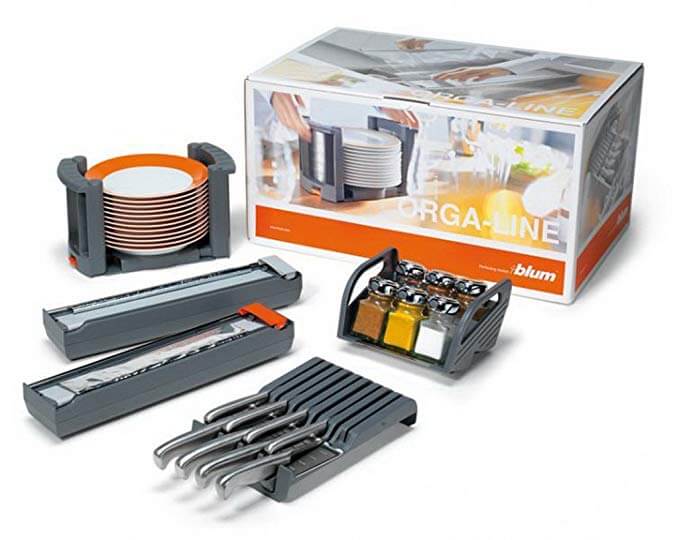
Every month The Kitchen Think is giving away one of these indispensable kitchen organisers worth £320!!




Leave a comment