
The Elegant Kitchen with Space, Functionality and Texture: By Roundhouse
By Linda Parker
 Roundhouse designs and manufactures bespoke kitchens and furniture for all rooms in the home. The company was established in 1996 in North London, and there are now six showrooms, including the flagship in Wigmore Street London.
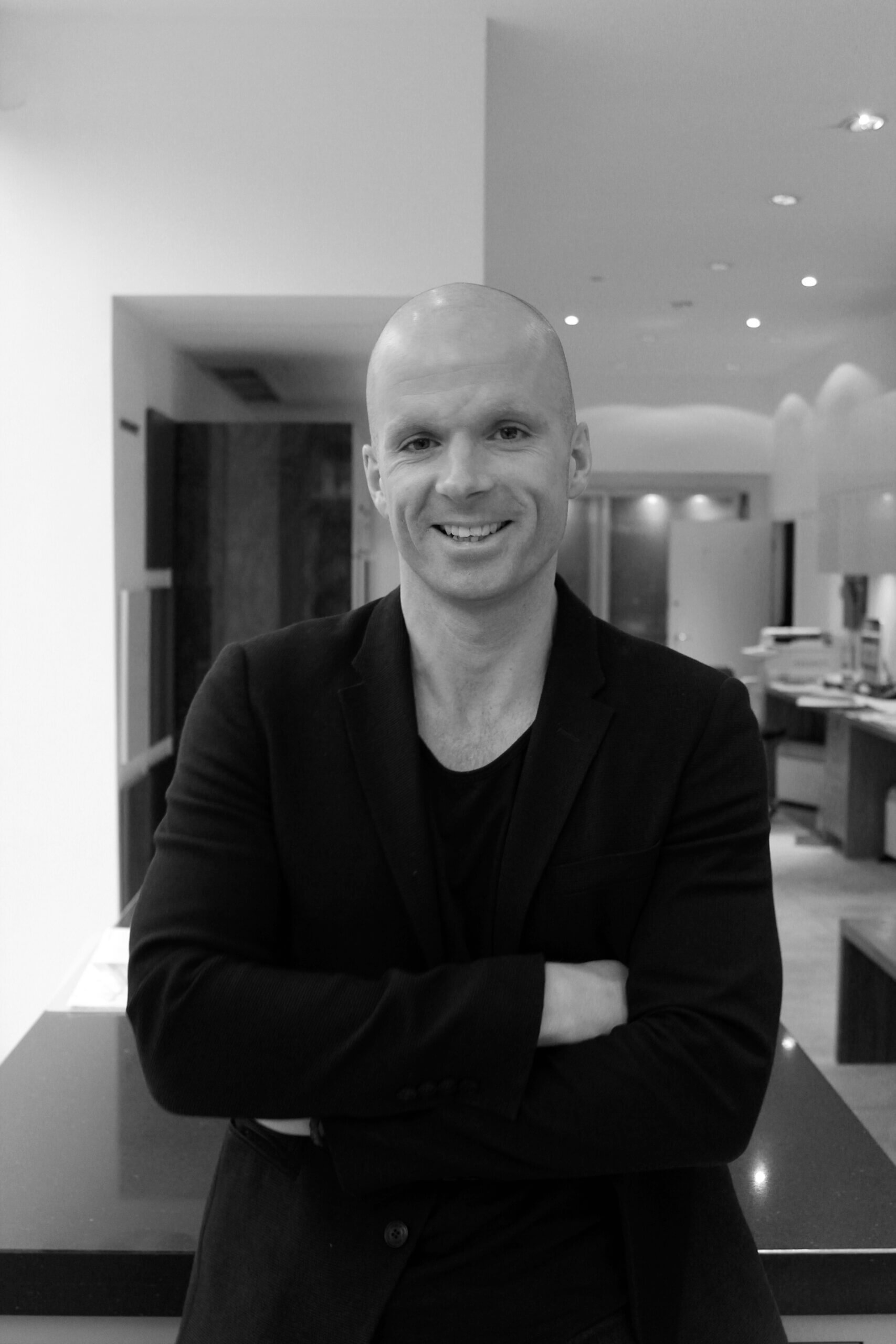
Senior Designer Ben Hawkswell is based at the Richmond showroom and guides us through the ideas behind this interesting and elegant family kitchen.
Q: What were the stand-out priorities in your brief from the client?

Q: What were the stand-out priorities in your brief from the client?
We were asked to reimagine the kitchen from scratch, following severe flood damage.
Whilst restoration was essential, our clients also saw it as an opportunity to improve functionality and flow of their home. Their brief centred on creating a space that balanced beauty with practicality, making full use of natural materials and with subtle tonal variation.
Q: How did you set about answering that brief?
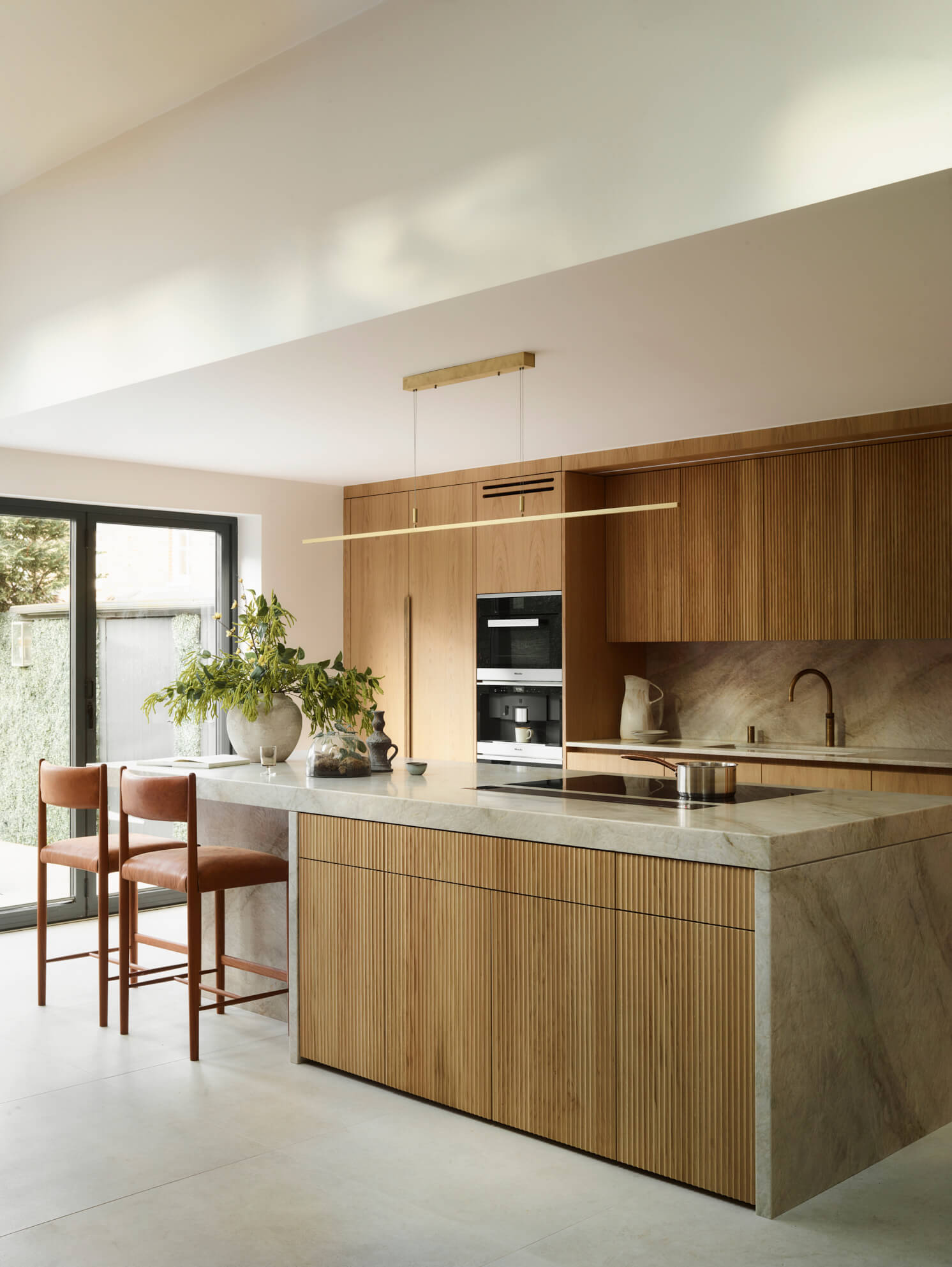
The clients approached us with a clear ambition: to restore and refine their ground floor in a way that would feel harmonious, modern, and enduring. Although we were working within the usual budget boundaries of a bespoke kitchen project, there was a shared understanding that thoughtful material use and clever spatial planning would deliver lasting value.
Our design process began by stripping everything back, literally and conceptually. We viewed the renovation not just as repair work but as an architectural reset. From this clean slate, we reconfigured the layout, straightened out wonky wall lines, and maximised light and flow. The joinery became the anchor: minimal but rich in detail, with all elements working hard both functionally and visually. We worked closely with the client throughout, to ensure every decision served both everyday use and long-term enjoyment.
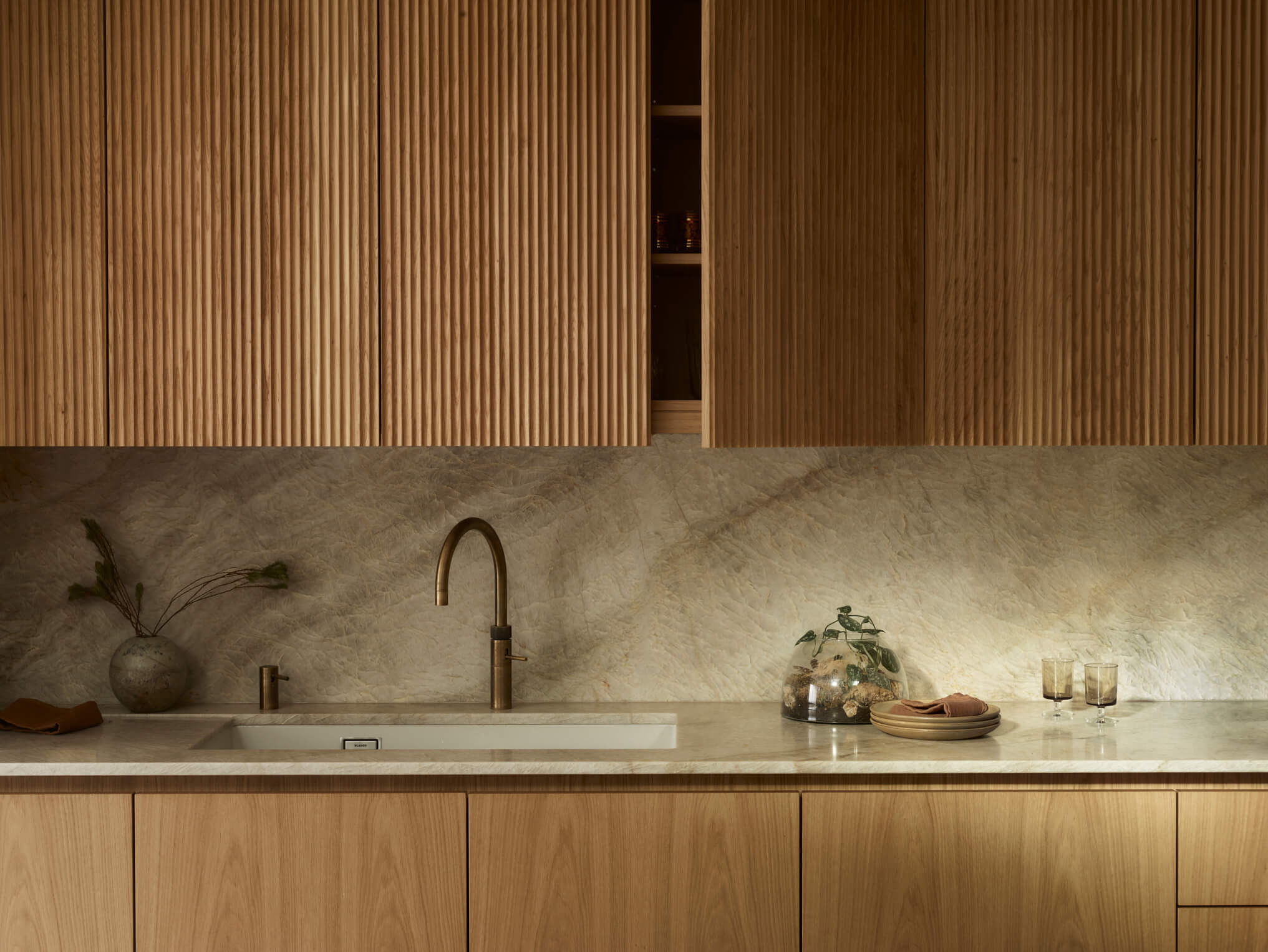
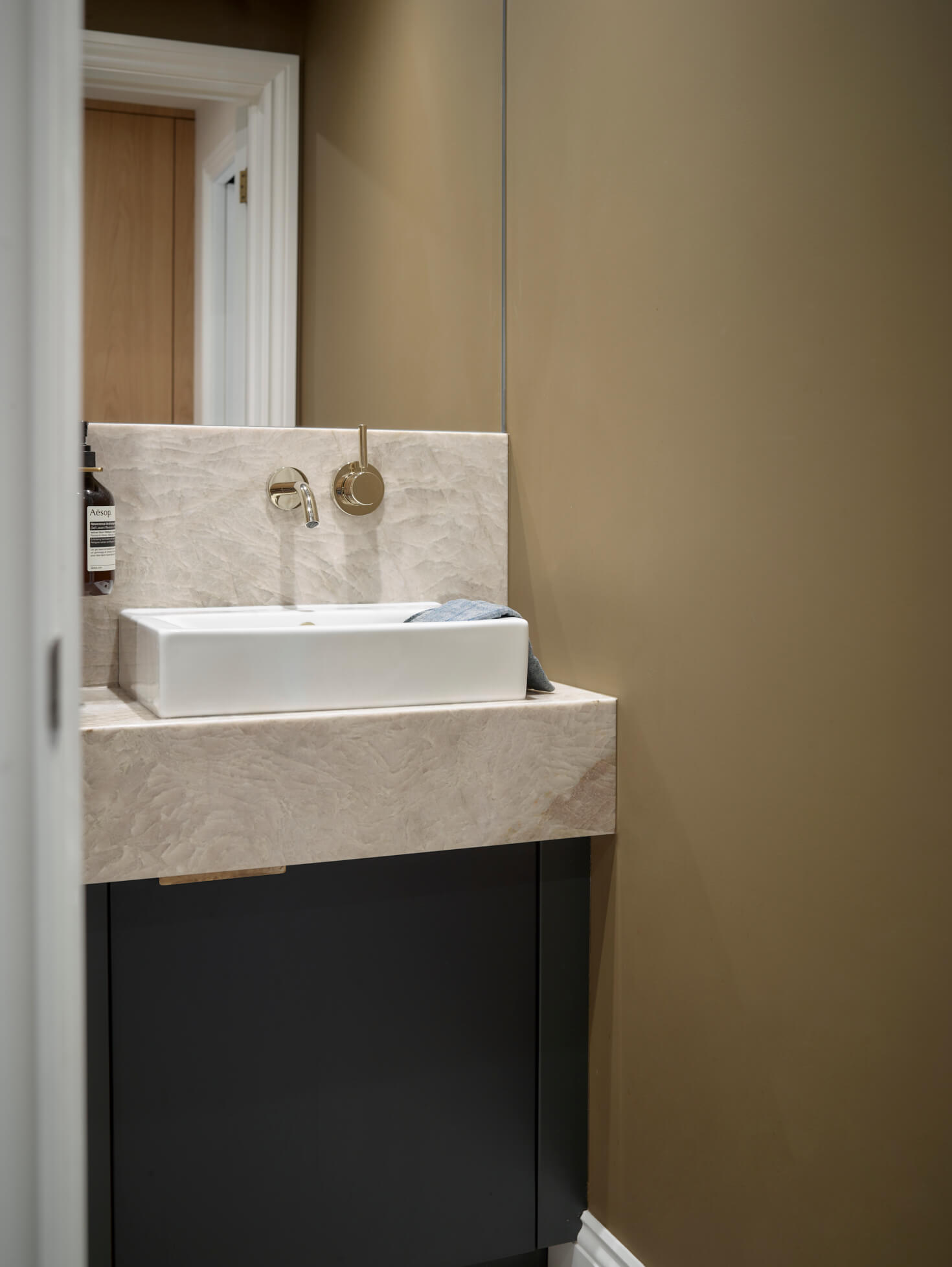
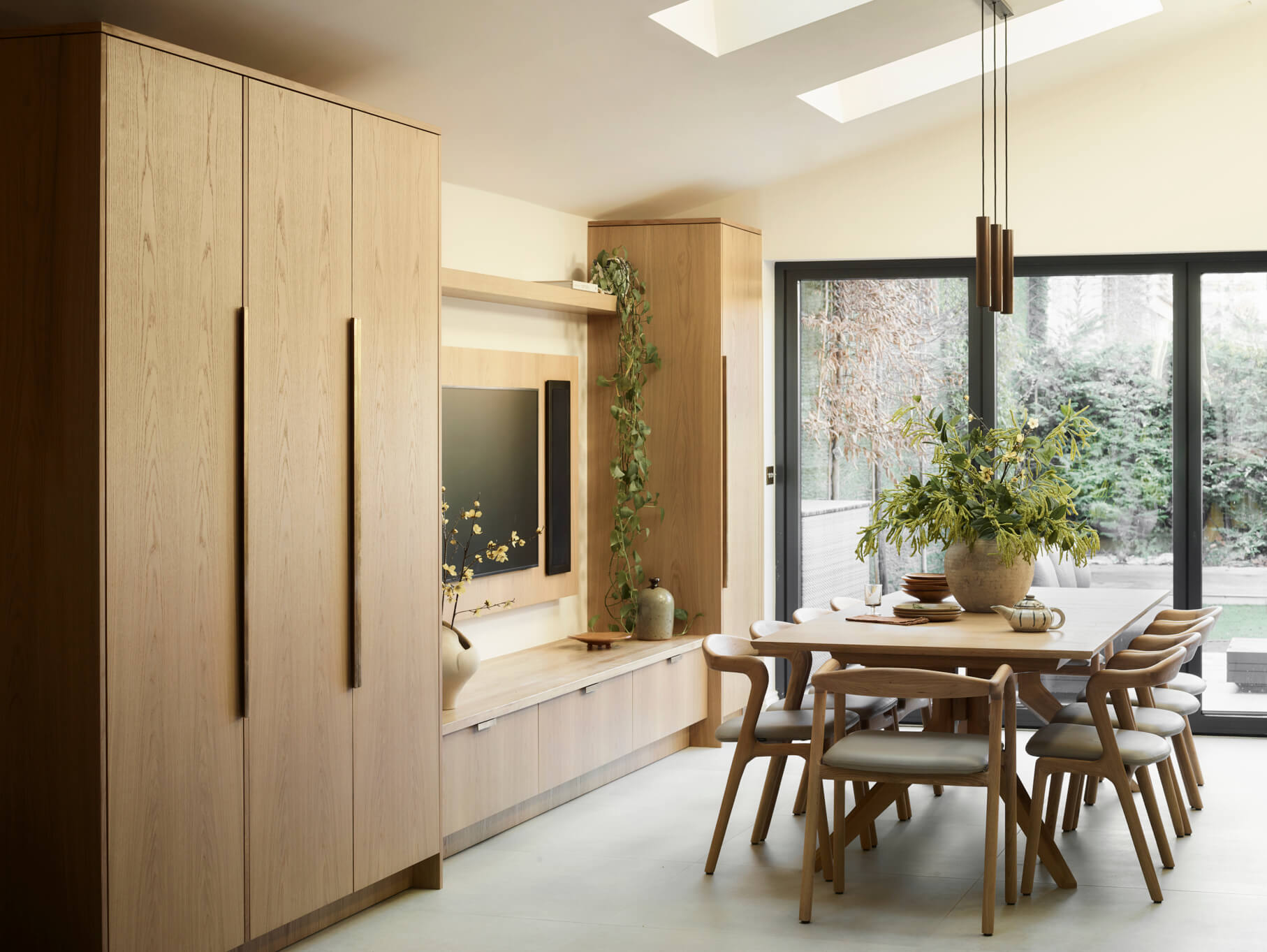
European White Oak became the foundation of the scheme. We were able to use it to great effect in multiple forms, including book matched, crown-cut veneers, fluted door fronts, and solid oak surfaces. The aim was to keep the palette tight but richly layered. Spatial efficiency was equally important to our clients. A guest WC was discreetly incorporated into the footprint without compromising the openness or visual balance of the kitchen. Hardware was chosen for its timelessness – recessed brass edge pulls that age beautifully over the years. The result is a serene, tactile space that feels grounded and considered.
Q: Explain the reasons behind the choices of cabinetry and work surfaces …
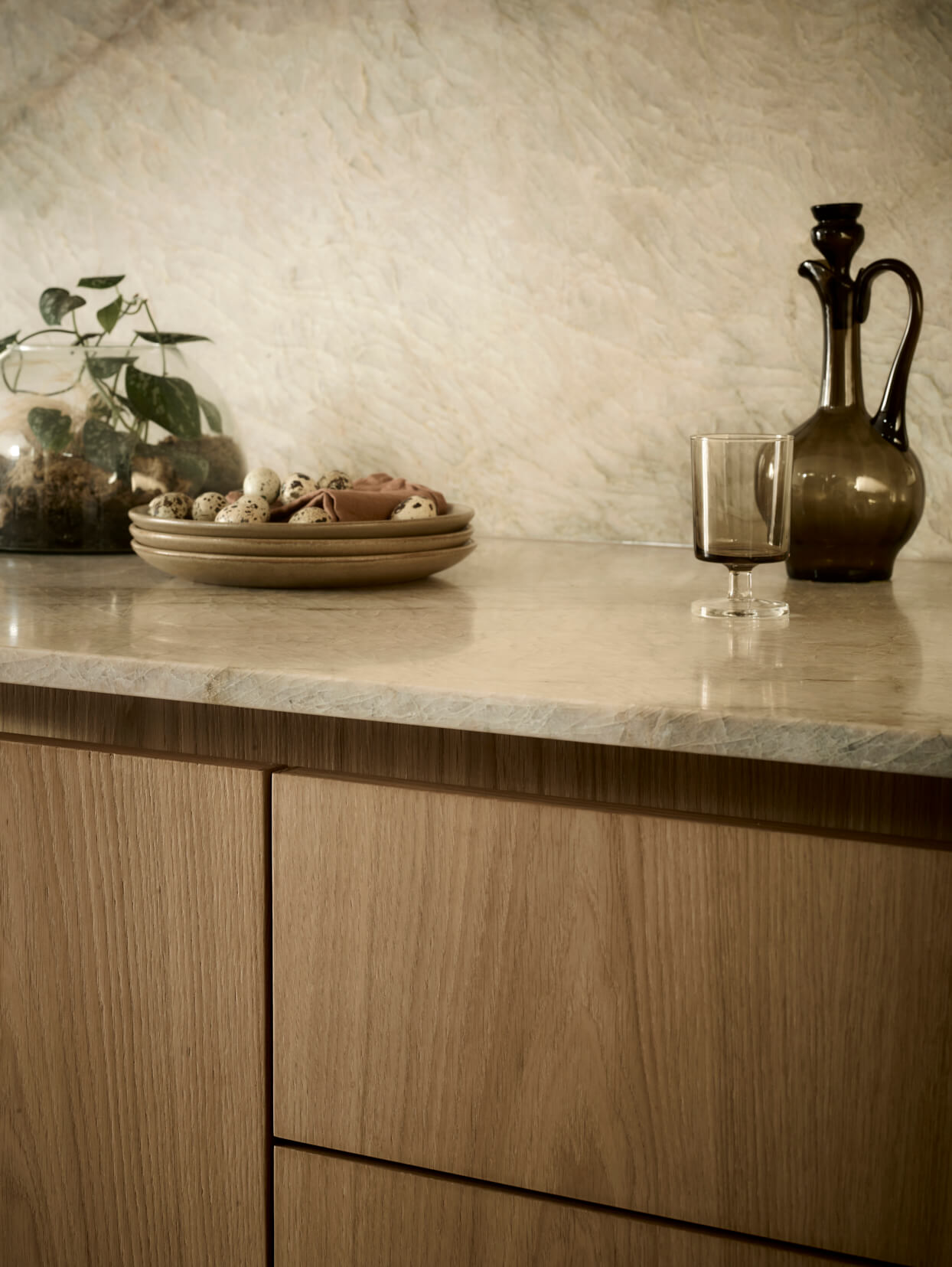
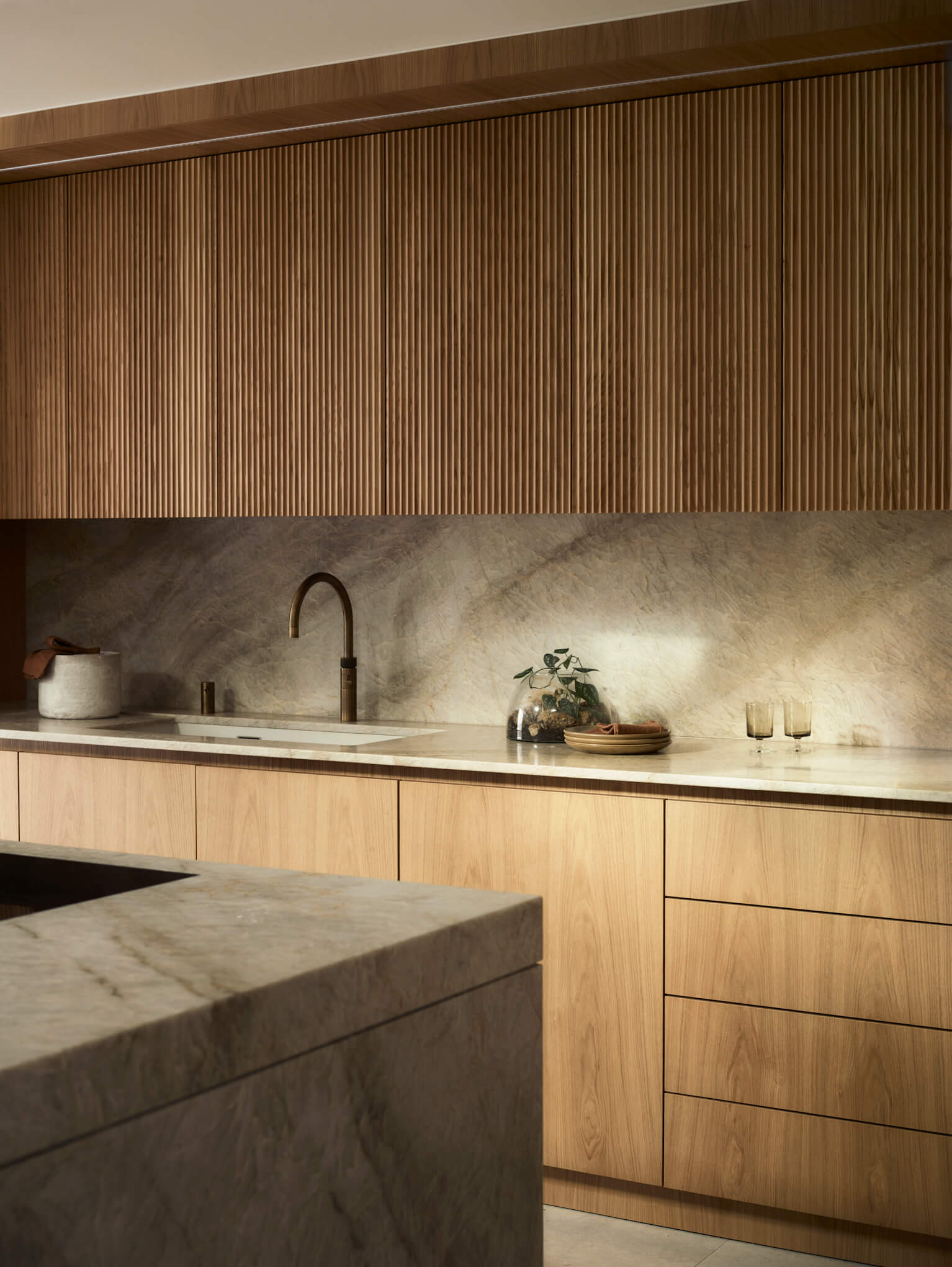
We wanted to create a quietly expressive kitchen, using the natural beauty of oak to introduce texture and variation without it feeling ‘over-designed’. European White Oak was chosen as the primary material; it’s sustainable, warm-toned, and deeply versatile. We used three finishes: smooth book matched crown-cut veneer for the cabinetry, fluted fronts for added tactility, and solid stave surfaces for horizontal elements. This allowed the oak to lead the aesthetic story.
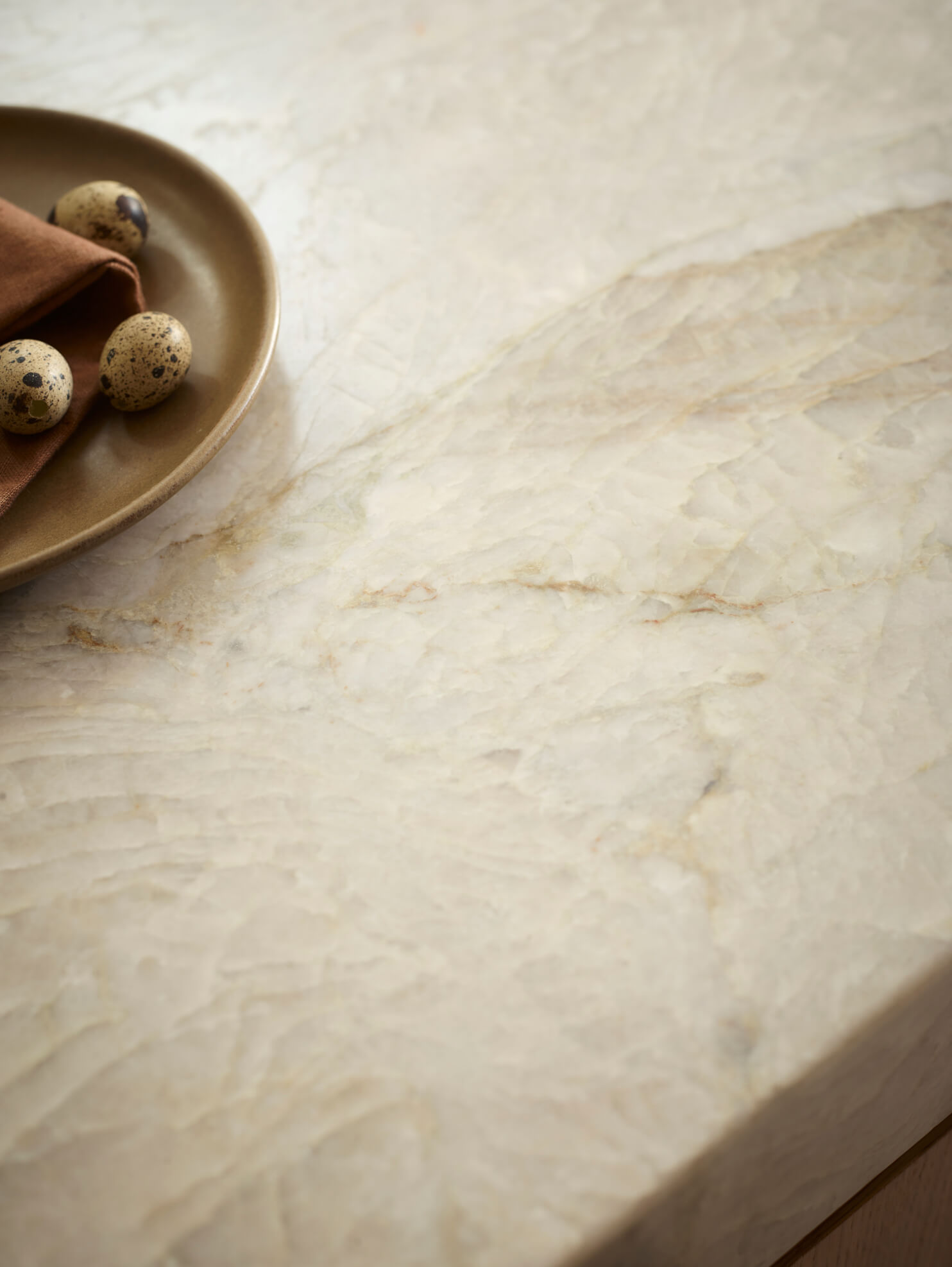
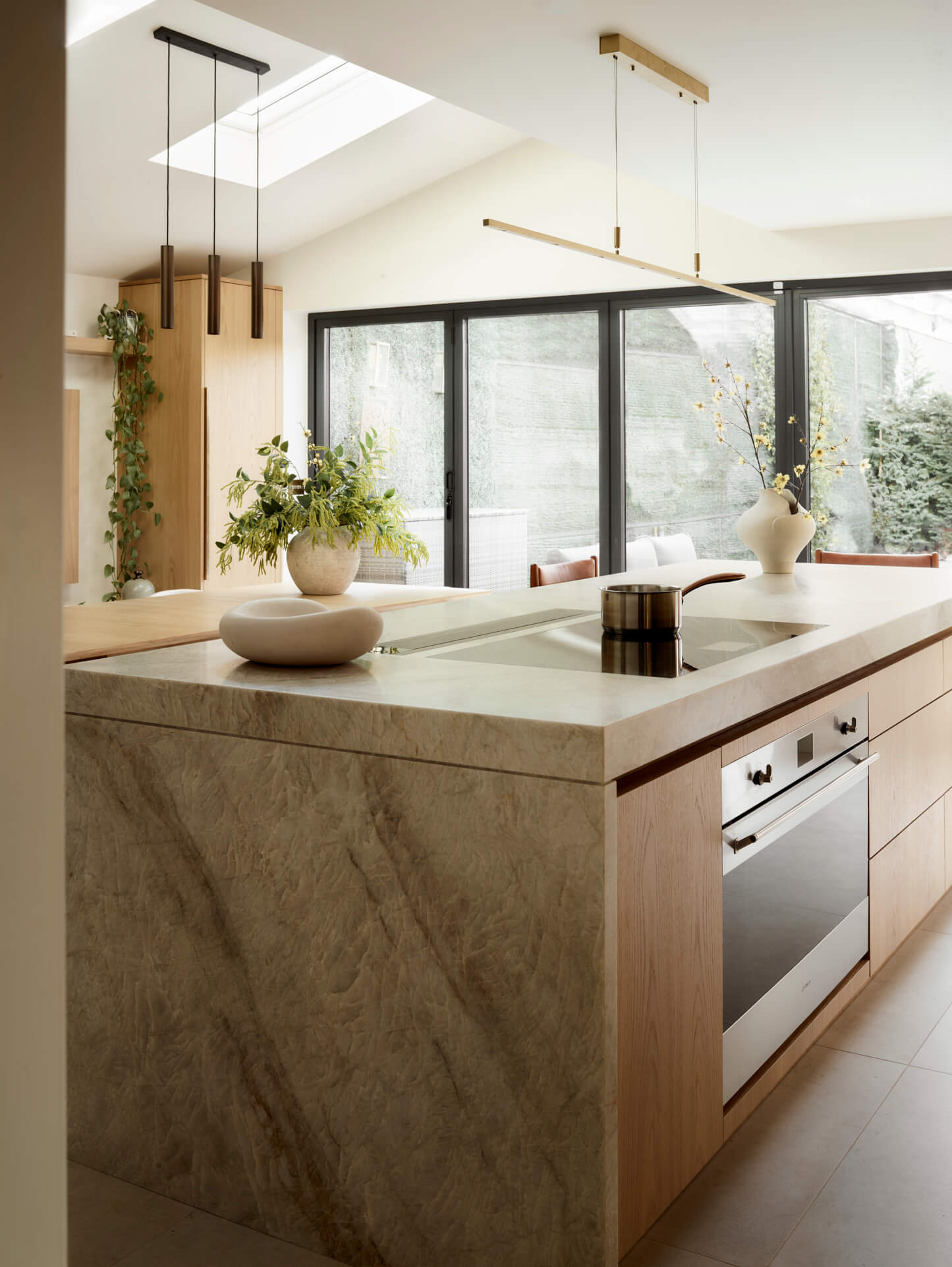
Worktops were kept complementary but contrasting in tone. A soft, leathered quartzite was selected to bring an organic movement and subtle colour shift to the palette. Hardware was kept minimal and integrated where possible, with recessed edge pulls in waxed brass adding warmth and age over time. No painted cabinetry was used in this project, as the natural wood brought enough tonal variation on its own. The goal was cohesion and comfort, not monotony.
Q: What is the story of this completely new space?
The project began as a full ground-floor renovation after extensive water damage. Whilst the kitchen retained the same footprint, the opportunity to strip everything out meant we could entirely rethink how the space worked.
One of the most transformative architectural decisions was to straighten the irregular walls and ceiling lines, which previously disrupted flow and limited joinery options. By creating a cleaner architectural shell, we laid the groundwork for a much calmer and more considered interior.
We also reconfigured adjoining areas to better suit the clients’ lifestyle. We were able to integrate a discreet cloakroom into the plan and improve access to the garden. The open-plan space now feels intuitive and welcoming, with materials like oak, quartzite, and brass used to soften the contemporary layout and introduce tactile elements. The architectural work made all the difference in setting the tone for a kitchen that’s as functional as it is elegant.
Q: What design elements do you think make the scheme so successful?
There’s a quiet confidence in this kitchen that comes from the disciplined use of a single material palette. The decision to work almost entirely with European White Oak was bold, allowing us to focus on detail and variation through texture rather than colour. The use of fluted fronts, book matched veneers, and solid timber surfaces provides richness and depth, rather than repetition.

The recessed brass pulls offer contrast, they’re both practical and decorative, developing a lived-in patina over time that complements the warmth of the wood. Functionally, the kitchen layout is a success thanks to its zoned plan, which includes open sightlines to the garden. Every decision was made to enhance daily life without being fussy or ostentatious . The result is a kitchen that feels calm, elevated, and effortlessly useable.
Q6: Can you give us details of the storage facilities – what features you chose and how they make this project successful?
Storage played a fundamental role in this design – as it was created for a young family. The challenge was to provide generous, accessible storage without compromising the calm aesthetic of the space.
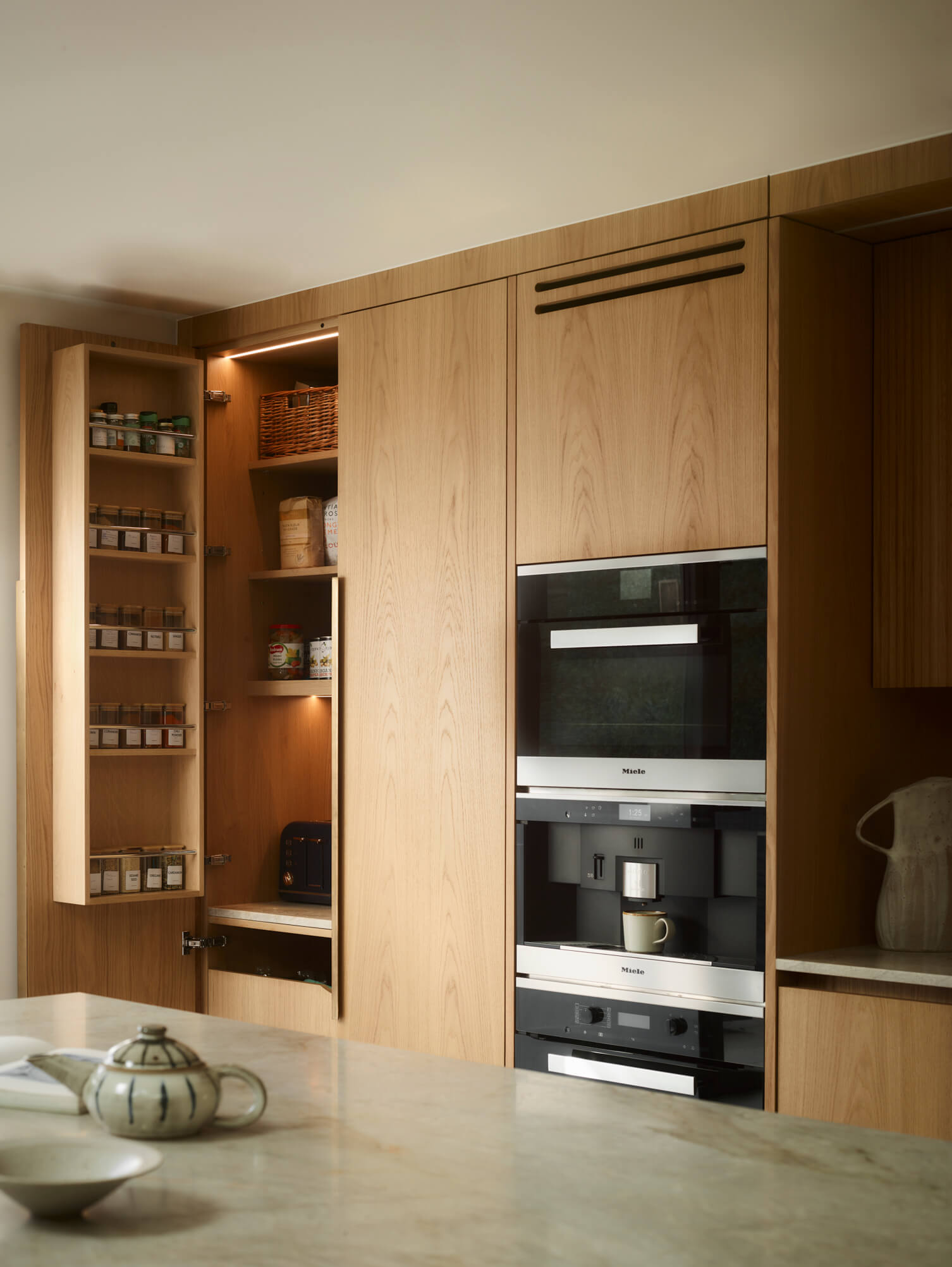
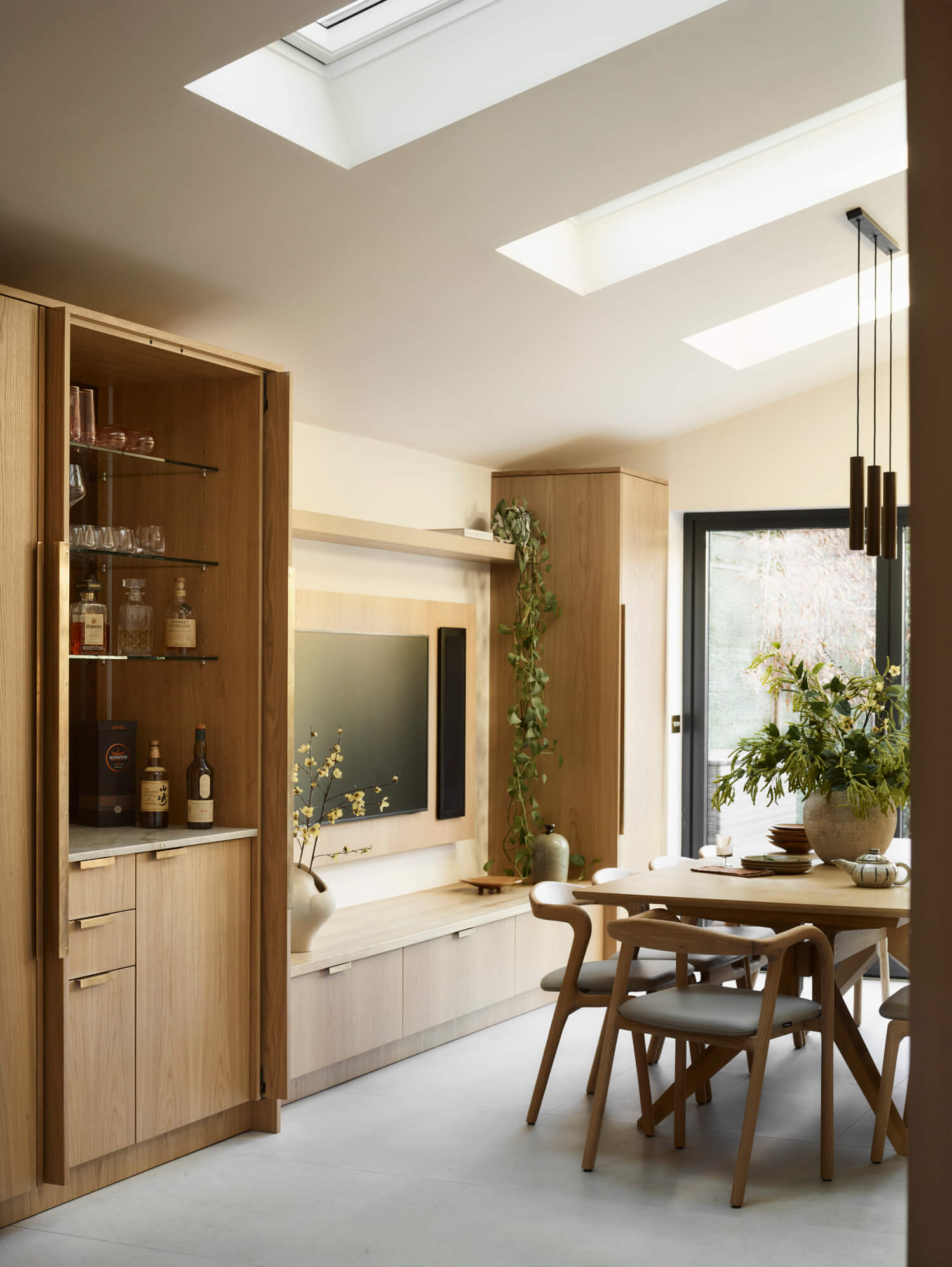
A concealed cloakroom was a practical addition that keeps everyday items like coats and shoes out of sight, helping to maintain the minimal, open feel of the room. A hidden pantry was also incorporated, allowing for additional storage of foods and kitchen equipment without interrupting the flow of the main space.
 The kitchen island was designed as a multi-use core, with discreet storage wrapped around its perimeter. This includes deep drawers for cookware and everyday utility storage – all accessed with minimal visual interruption due to the fluted detailing and recessed brass edge pulls.
These layered storage strategies are fundamental to the success of the project, and they also preserve the visual clarity and textural richness of the kitchen, ensuring it remains both calm and purposeful in use.
Q: What elements make this layout stand out from the crowd?
I think it is the fact that this kitchen is both understated and deeply expressive – achieved through a disciplined material palette and meticulous attention to detail. At its heart is the oak. Rather than relying on colour or contrast, the design leans into material honesty, allowing the grain, texture, and finish to bring quiet depth to the space.

Q: What is your best advice for someone who is planning a new kitchen?
The most successful kitchens are always the ones that feel personal. My advice is to start by identifying what truly inspires you – whether that’s a particular material, a design influence, or even a feeling you want the space to evoke. In this project, the clients were a well-travelled couple with a love for natural materials and quiet, considered design. Their interest for both Asian and Scandinavian aesthetics gave us a clear starting point, and from there, we curated a palette that reflected their taste and lifestyle.
Don’t be afraid to let your interests guide the process, even if it takes longer to find the right finishes or materials. Sourcing elements that feel authentic to you may require patience, but the result will be far more meaningful and lasting.
Q: What is your favourite feature or facility to include within one of your projects?
When it comes to facilities, a hidden bar or drinks cabinet is always a great way to add a bit of extra glamour and practicality to an already spacious room.
As for the finer details, I love those simple, understated touches in joinery or stonework – like a recessed edge-pull handle or a beautifully rebated butt joint in the stone. It’s those little design moments that really elevate a space.
Q: What are your trend predictions for 2026?
One trend we’re already seeing gain momentum, and I believe will continue to grow, is the resurgence of Asian-Scandi fusion in both kitchen and interior design. At its core, it’s about embracing warmth, simplicity, and natural textures. It’s a move away from stark minimalism towards something softer, more grounded, and human.
People are increasingly looking for interiors that feel personal and timeless, rather than trend-driven. I think 2026 will continue to favour materials that age gracefully, layered natural textures, and thoughtful craftsmanship over bold colour or overly decorative finishes.
Kitchen design and manufacture by Roundhouse. Main showroom, 11 Wigmore Street, London W1U 1PE. Tel: 020 7297 6220. E: info@roundhousedesign.com Instagram: roundhouse_design
Fridge-freezer – Gaggenau
Kitchen tap – Quooker Fusion
Cloakroom tap – Dornbracht
Handles – Henry Blake
Ovens and microwave, Miele, Smeg
Cross Extending Dining Table by Matthew Hilton, Case Furniture
Share this article
Featured Product: LEGRABOX
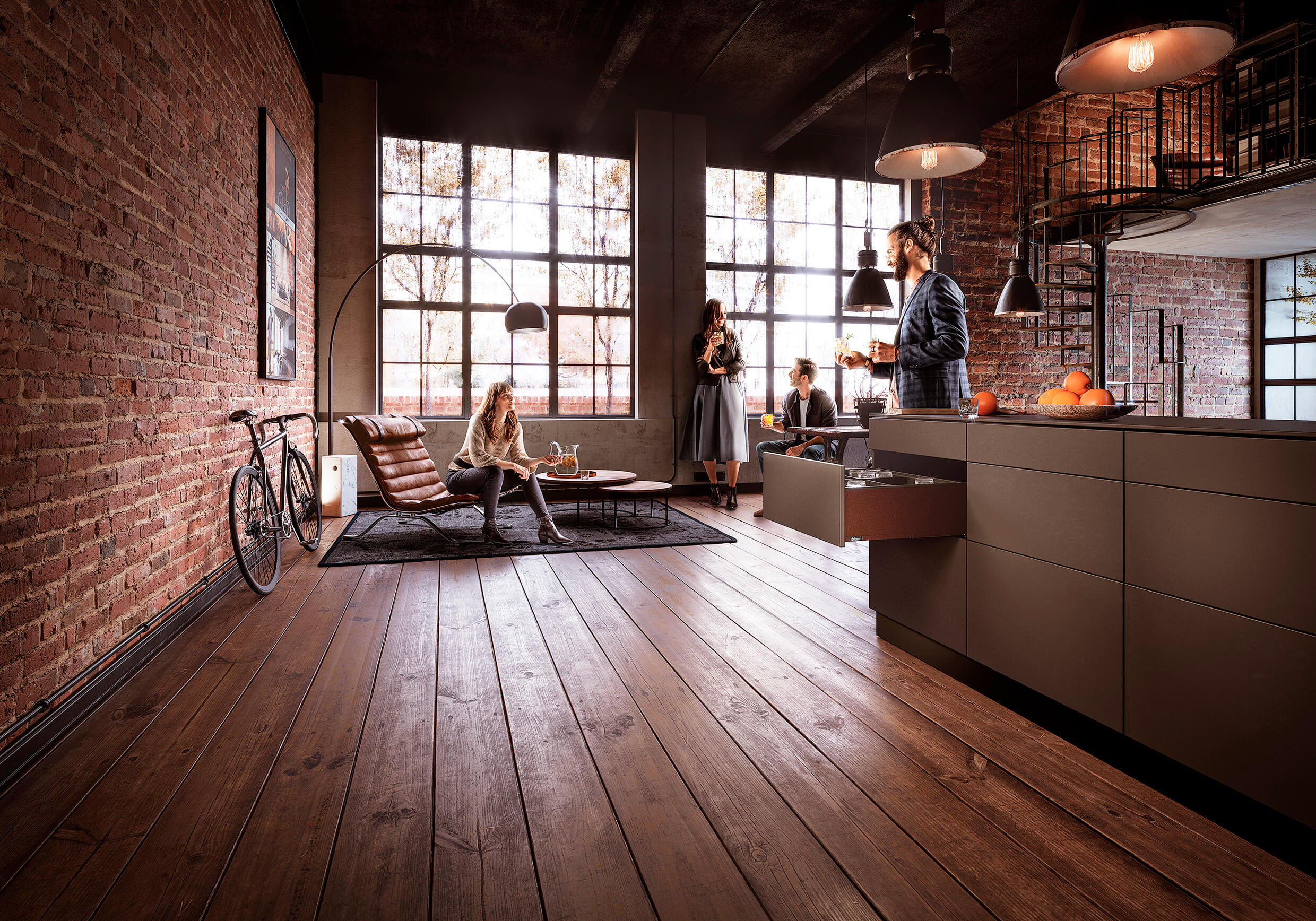
Win a Blum ORGA-LINE box worth £320!!!
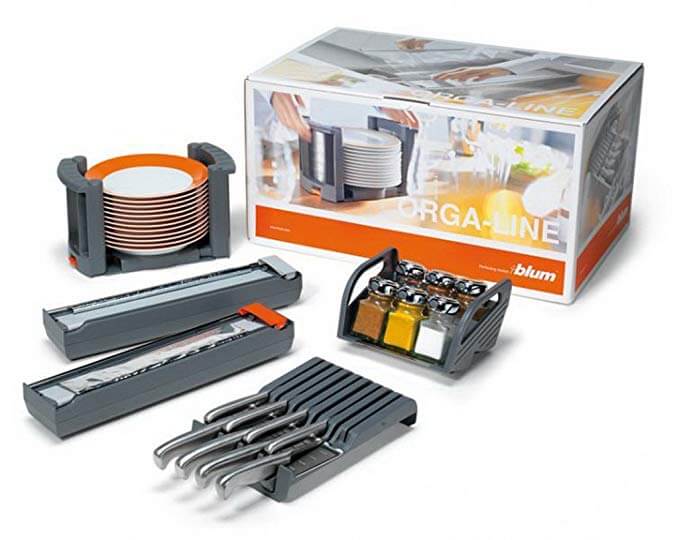
Every month The Kitchen Think is giving away one of these indispensable kitchen organisers worth £320!!




Leave a comment